Walmart Sourcing Decision Engine
From 31 weeks to 10: Streamlining Walmart's $144M sourcing bottleneck
Analytics tooling
6 month project
The problem: a fragmented and costly process
A single sourcing cycle took 31 weeks, with each revision adding 5 more weeks. This wasn't just inefficient—it left $125-179M in annual cost savings on the table.
Emails, offline spreadsheets and disconnected tools









There was a higher likelihood of error, inconsistency, and incompleteness, and an inability to systematically track tasks and documents.
Generic 3rd party platform not built for Walmart
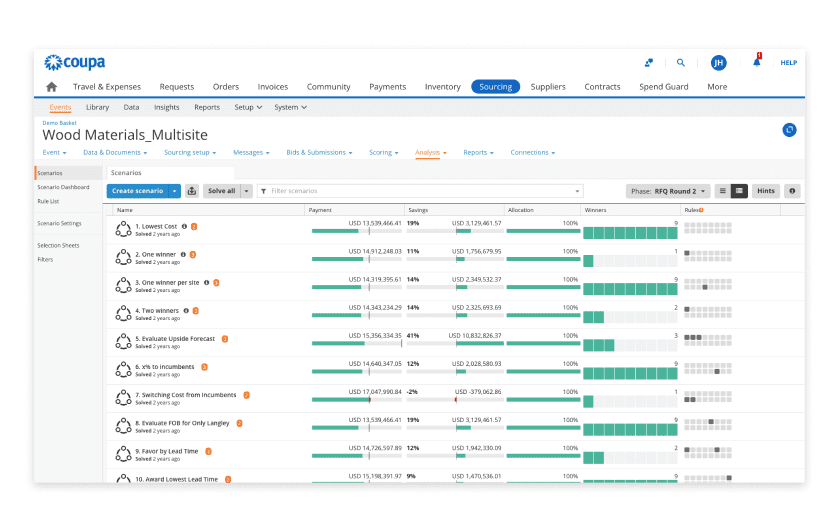
Analysts made manual workarounds to force the tool to work for their use cases, leading to costly troubleshooting and a steep learning curve for new employees.
The goal and vision
Build an integrated platform to streamline cost analysis, optimization, and decision-making across three user roles.
Analyst consultation form
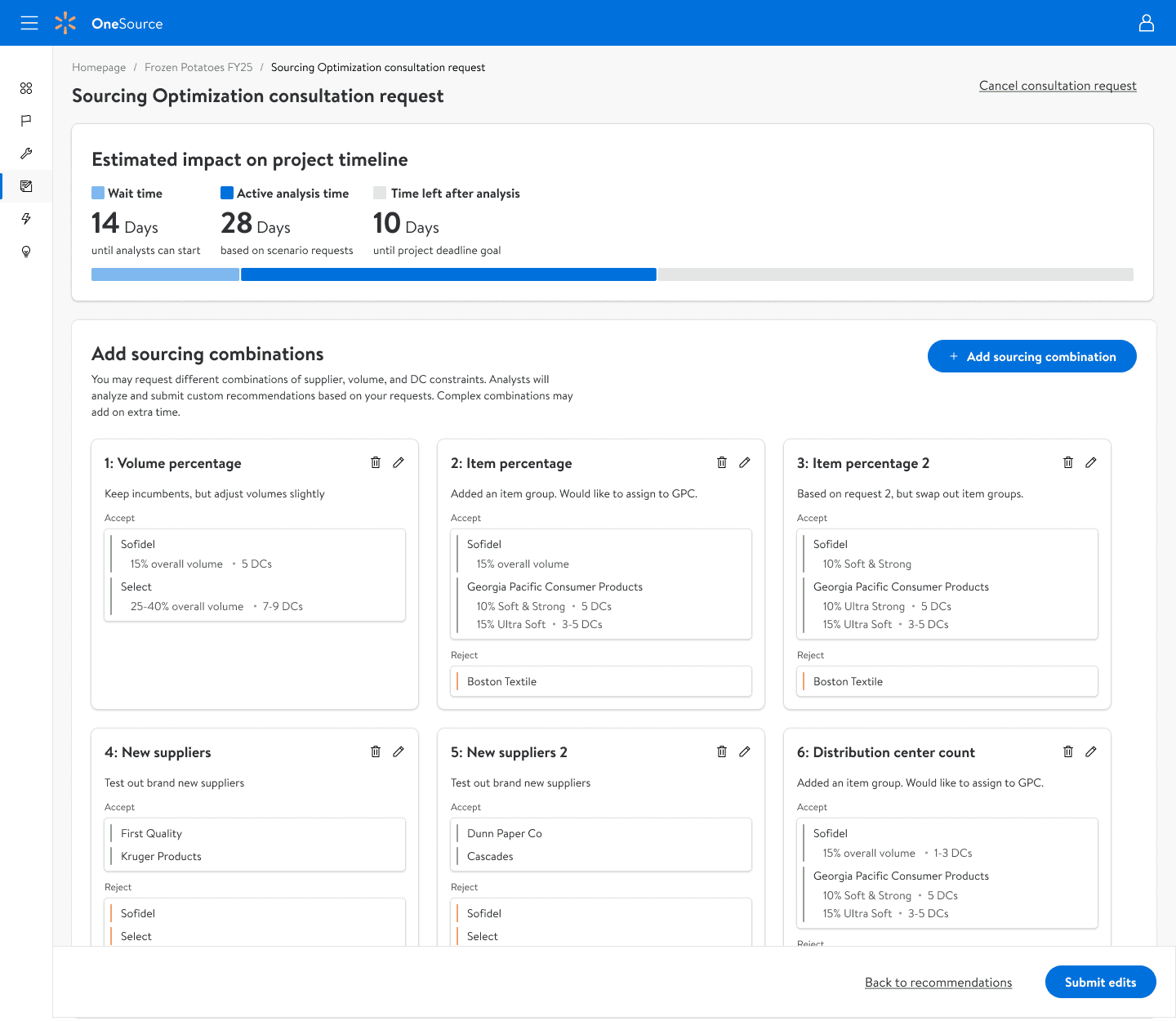
Sourcing Managers often request analyst support through email. Emails were non-standardized, often incomplete, and led to a lot of back-and-forth. I designed a consultation request form to standardize the process.
Standard inputs
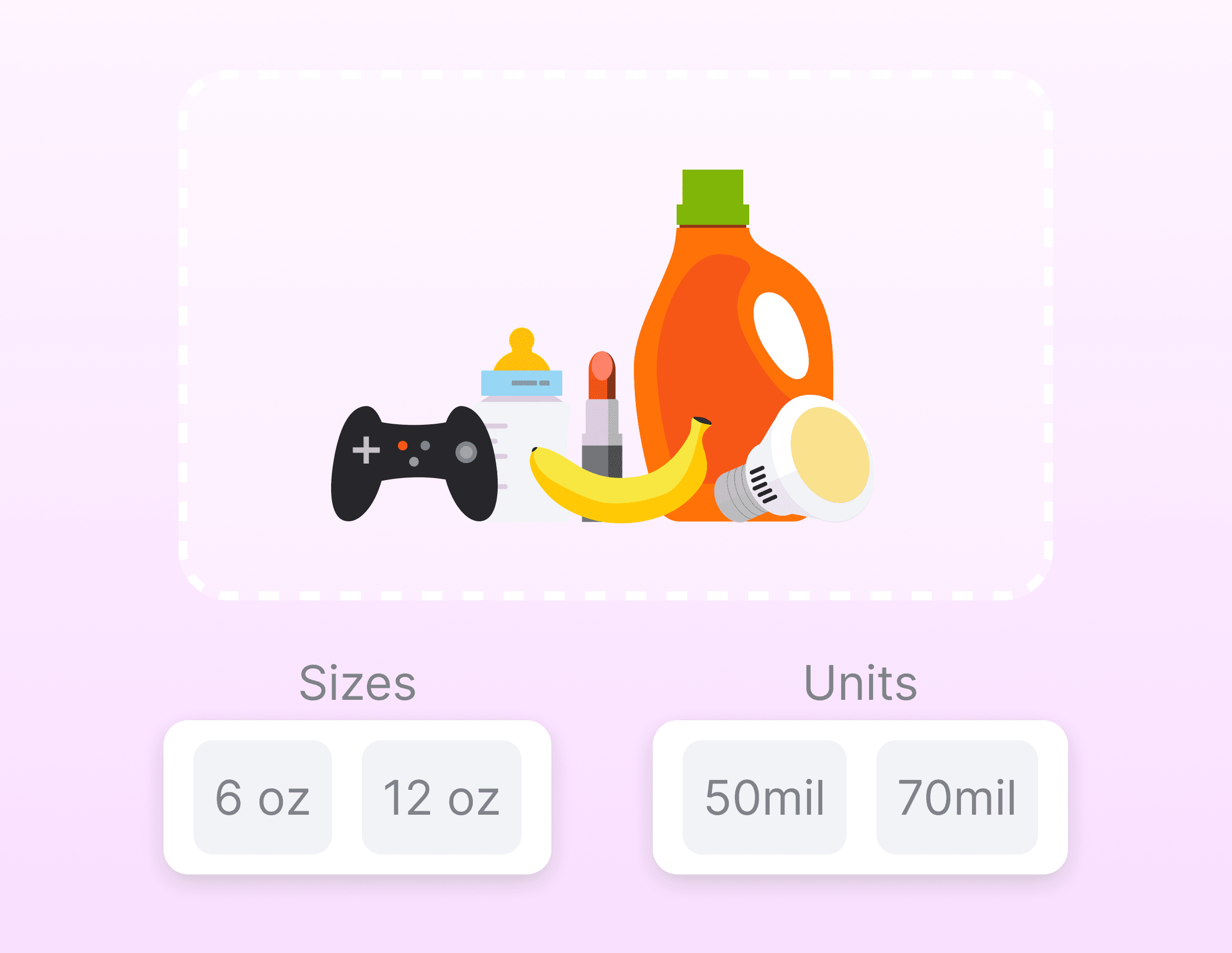
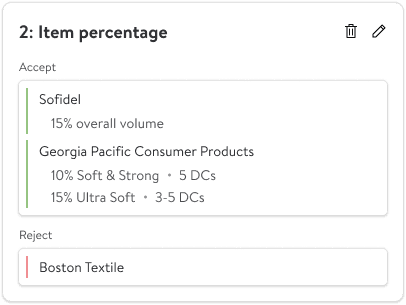
New form organized each scenario request to include strategy, supplier names, unit volumes, and more.
Timeline estimation
Real-time estimation showed how each additional request would impact delivery and overall project timeline.

Automated recommendations
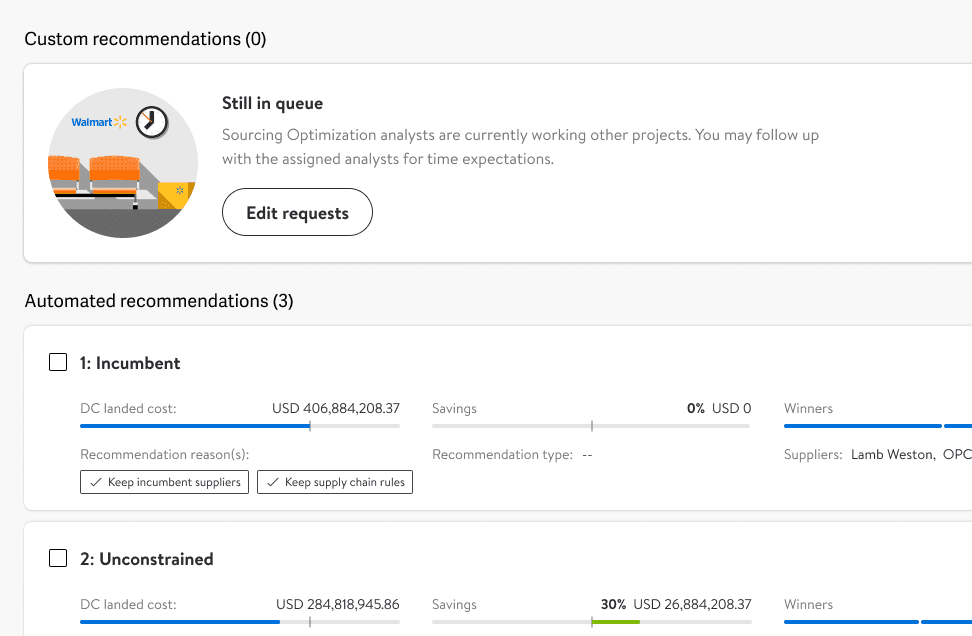
Analysts always recommend 3 standard scenarios, so we automated those so Sourcing Managers could work with those before requesting analyst help.
Analyst's scenario-building tool
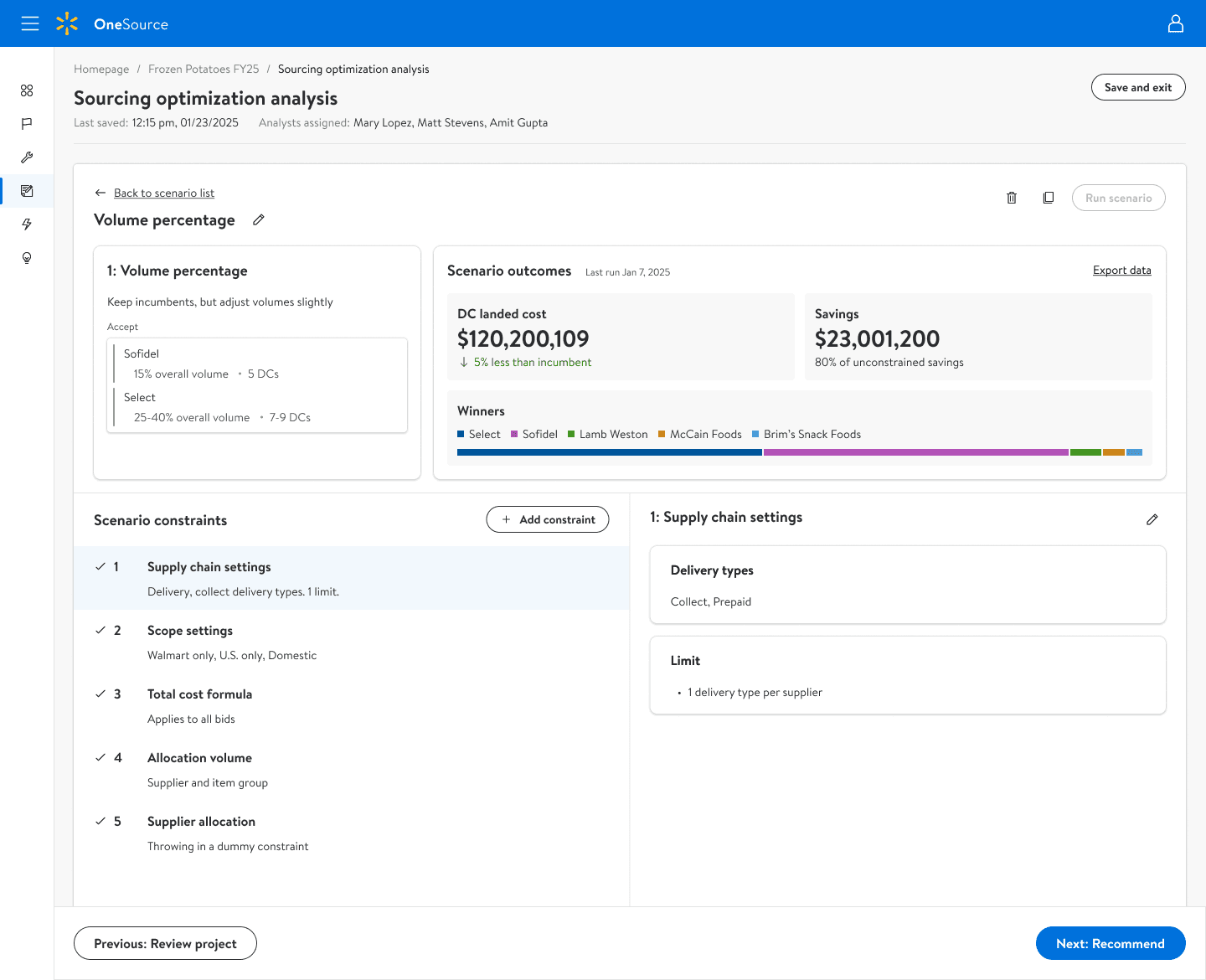
Creating custom sourcing scenarios was very manual and they had zero troubleshooting tools. I designed an in-house tool to help them do their job more efficiently.
Automated scenarios
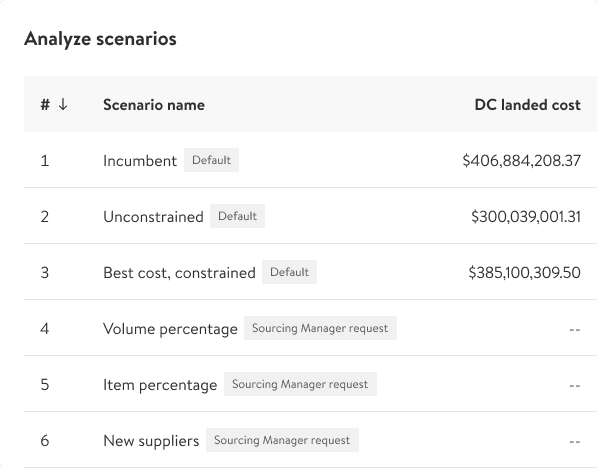
Using the inputs from the Sourcing Manager's consultation form, we were able to automatically create and name scenarios to start as a baseline so they didn't have to manually create all of them.
Simplified settings
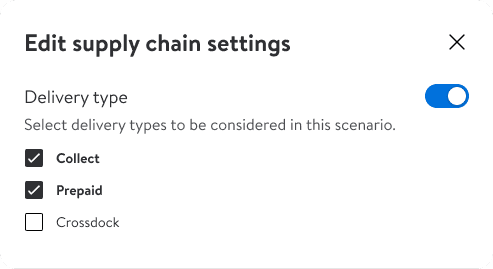
Analysts repeatedly wrote common constraints for every scenario, so we transformed those common constraints into simple toggles and checkboxes to reduce complexity.
Troubleshooting
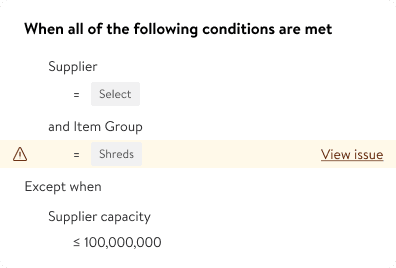
Analysts had trouble figuring out which constraints caused errors, so I designed error highlighting that pinpointed problematic lines and explained the issue.
Full scenario-building view
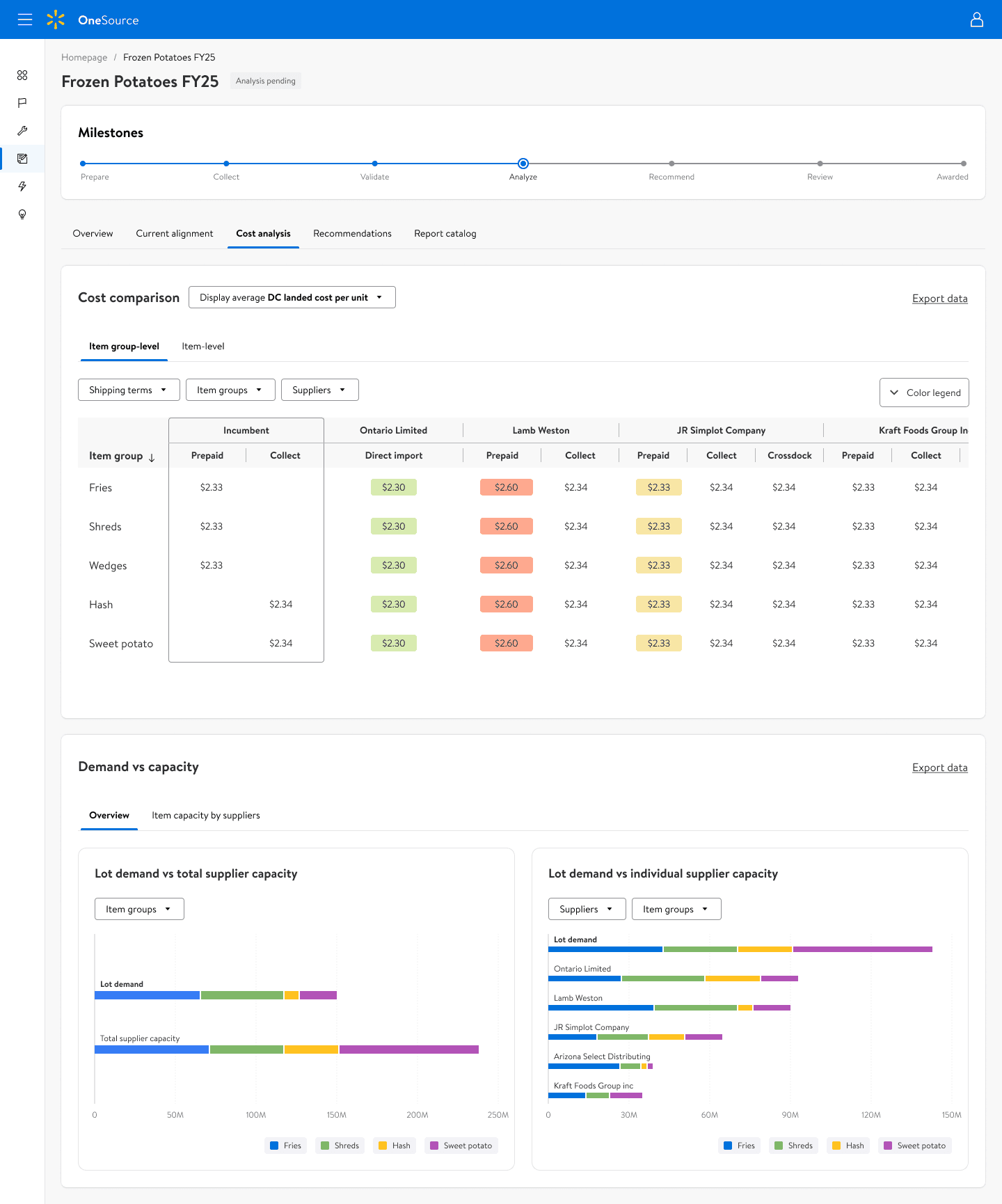
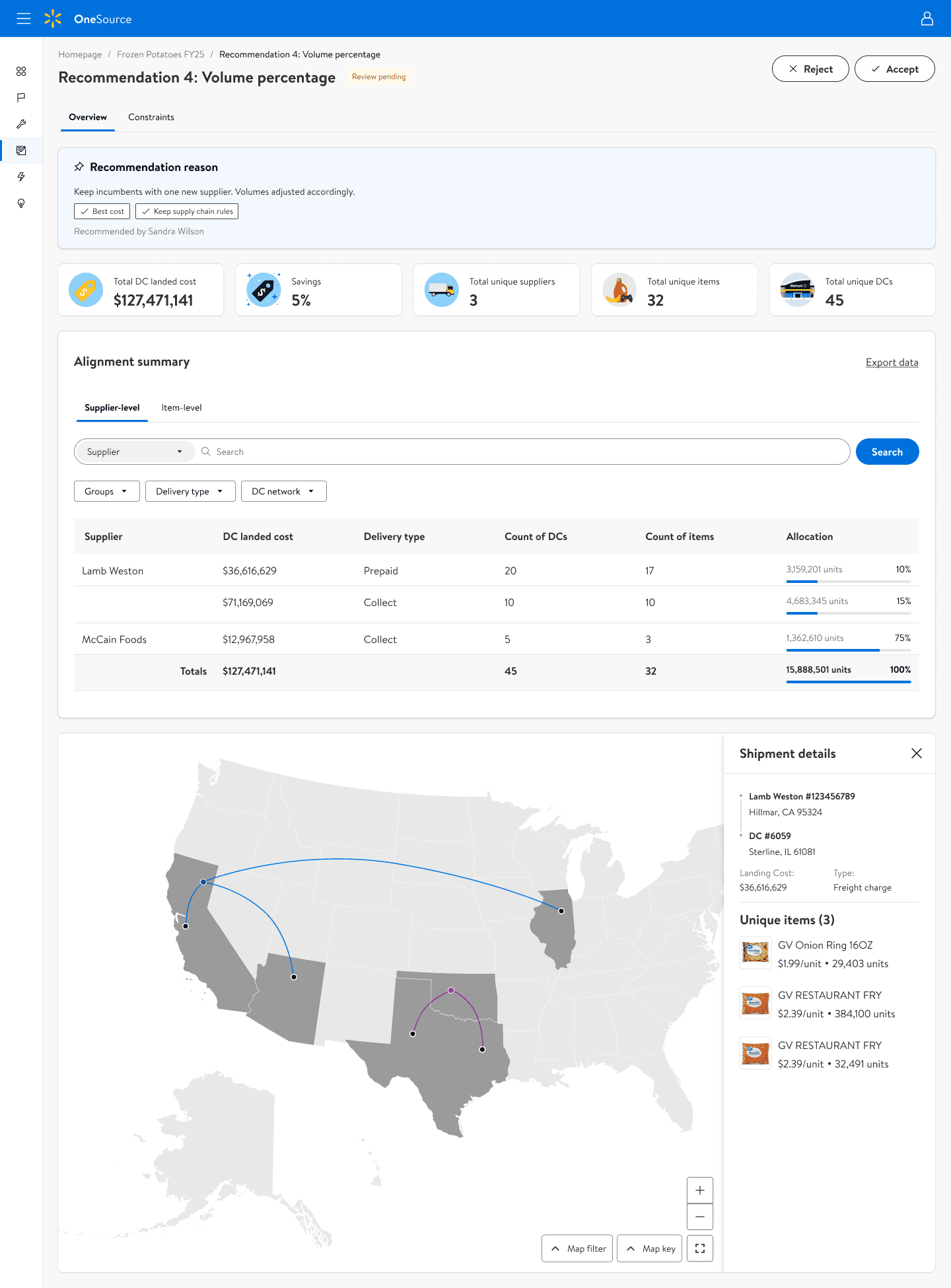
Scenario recommendation overview
User feedback
We tested the designs with Sourcing Managers and Analysts to get their feedback and thoughts.

Note: Some of the data confused users. It was a "design mock" problem. I tried my best, but the numbers in my designs weren't always realistic… le sigh… 🥲
Project impact
I voluntarily left Walmart while my designs were being built, but these were the project goals:
Revenue
Optimize ~144 sourcing projects per year, which would amount to ~$144M in annual savings.
User satisfaction
Increase satisfaction from benchmark of 48% users satisfied with the old experience.
Personal achievements

01
Quick ramp-up
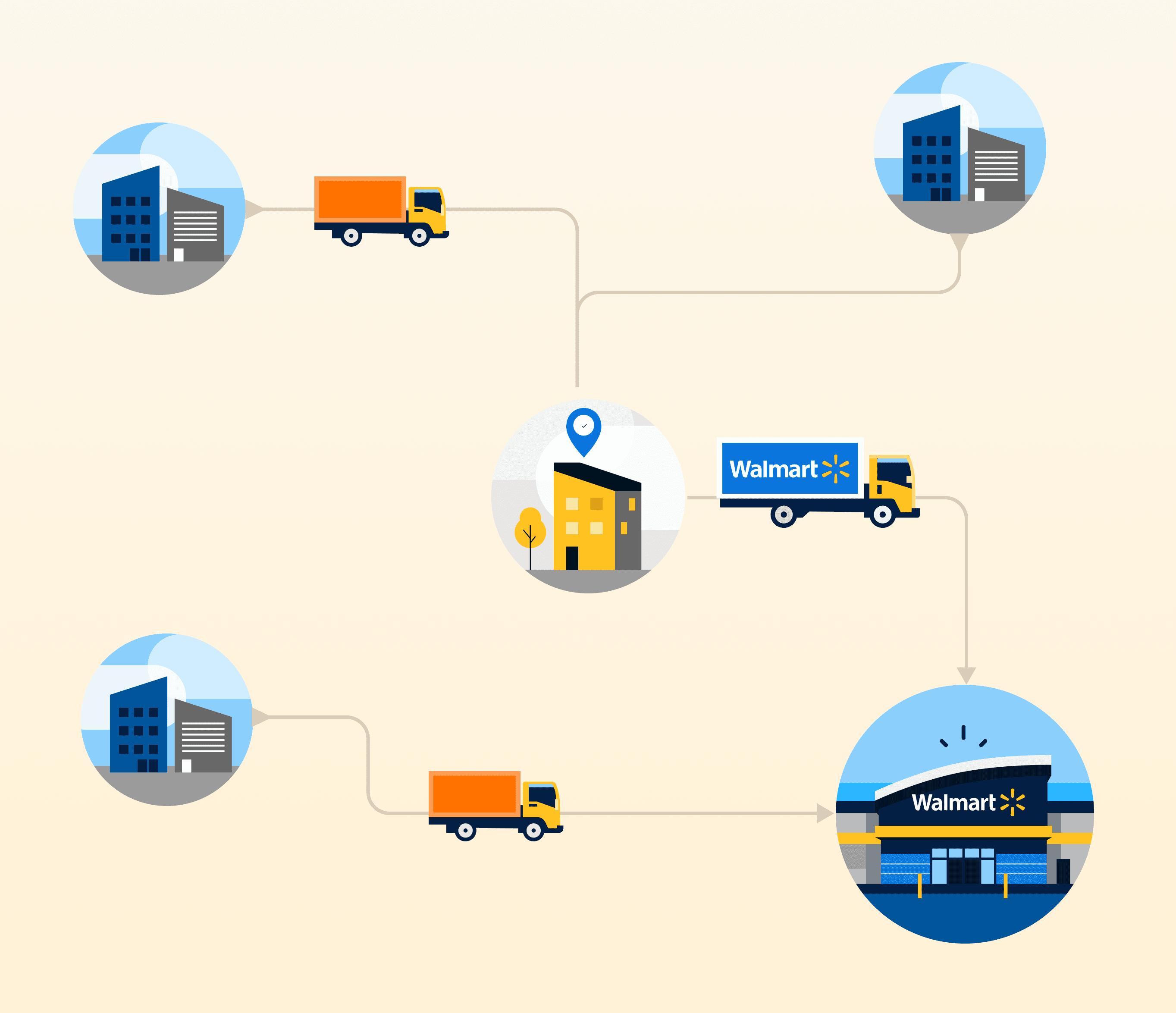
I was able to pick up the complexity of the global sourcing experience in the span of a couple months and became the design team's foremost expert on the subject matter.
02
Cross-team reach
Given the work touched many teams and functions, I partnered with my Product Manager on "road shows" to pitch and demo my designs and ensure alignment across the board.
03
Stitching things together
Walmart has a lot of silos and fragmented processes. I was able to look at things holistically and stitch a lot of things together.